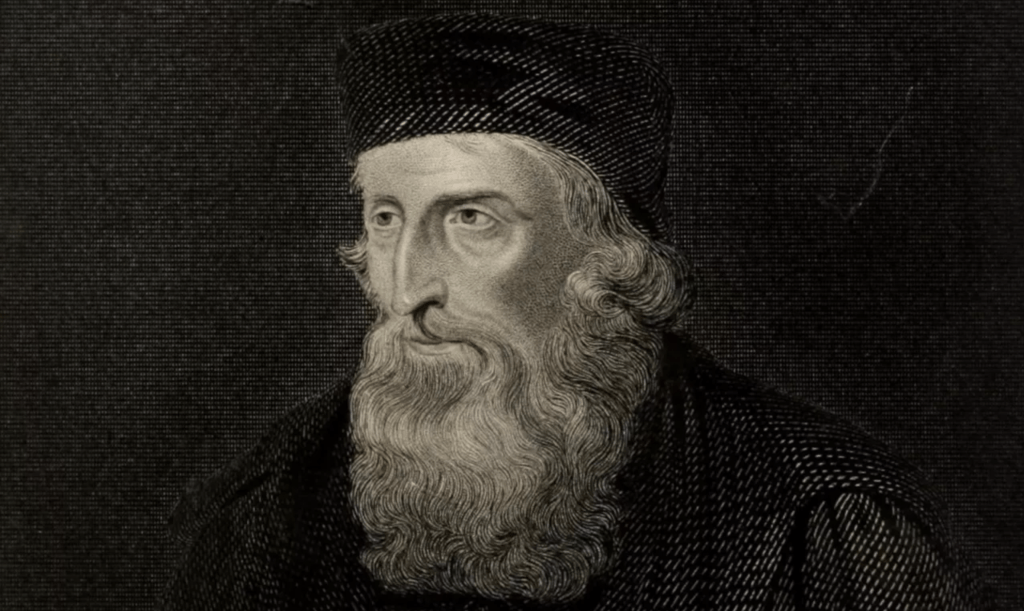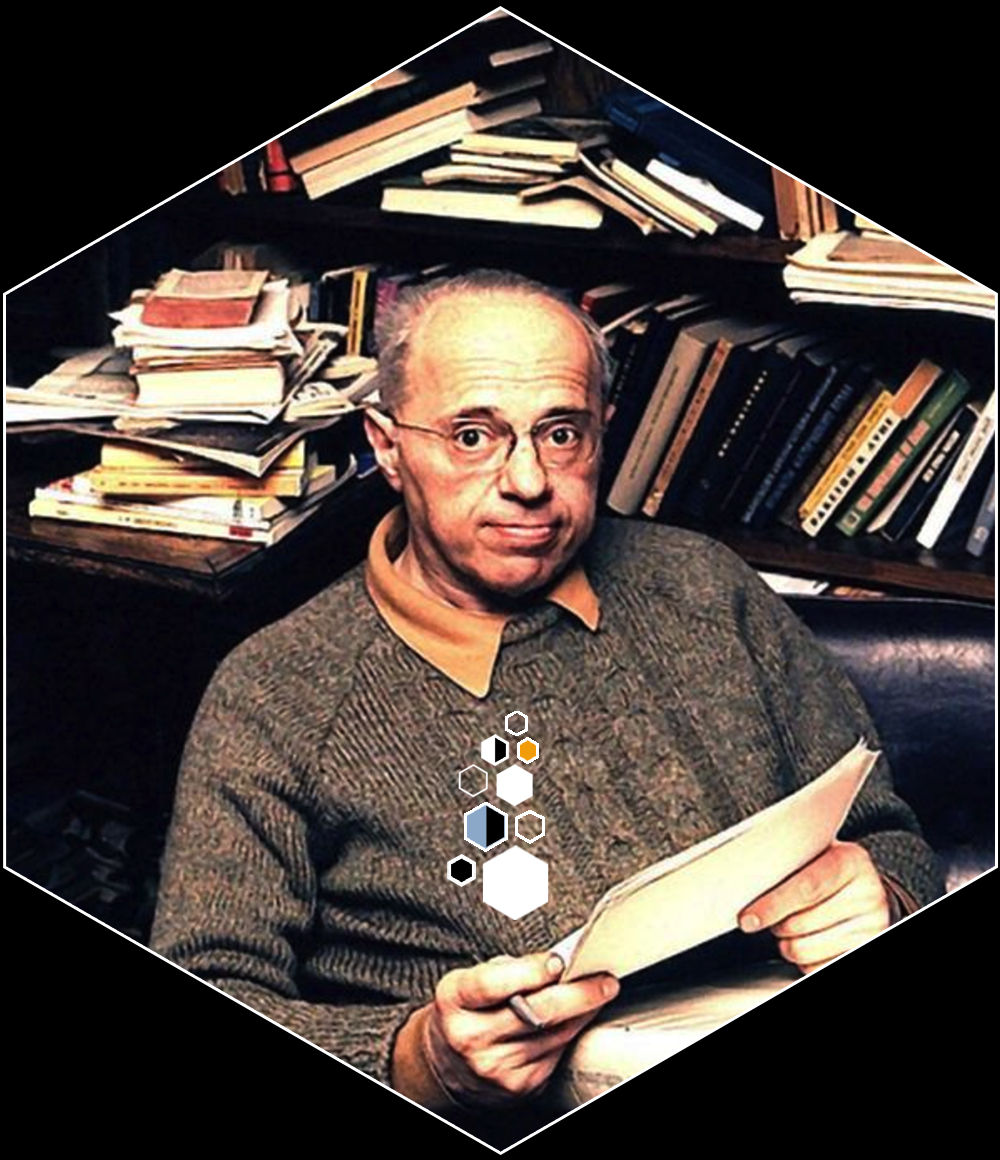
A prolific science fiction writer, Lem developed a unique understanding of futurological forecasts. Many of his works show not only accurate technological, but social forecasting and future challenges, some of which started to reveal themselves recently. Below are the main points of his critique of the work of Herman Khan, most famous book “Thinking about unthinkable” published in 1980, which outlined his views and approach to futurological forecasting. Khan was known for his work in the field of American military strategy, particularly in the field of nuclear strategy, he developed the so-called “scenario approach” to analysis of the development of aviation after World War II, author of the term “Think tank”.
“1. A “chronological leap” occurs when, under the guise of formulating a forecast, one constructs something akin to a school-level set of instructions. It is impossible to foresee every chess move, just as it is impossible to anticipate every unexpected event that motorists encounter on the road. However, one can write a chess textbook or a driver’s manual. These are useful books; yet, they cannot be termed “forecasts” for anything whatsoever. […]
2. “Omnivorousness” signifies a loss of distinction in one’s approach to the authenticity versus the plausibility of events and phenomena. […]
3. “Paradigmatic bastardization” is a reaction reminiscent of the behavior of a drowning man: true to the proverb, he grasps at anything—be it a razor blade or a mere straw. And [Herman] Kahn, too, attempts to find a foothold in whatever happens to come to his hand. Here, everything proves useful: Spengler and Aristotle, Marx and Pitirim Sorokin, Engels and Keynes, cyclical historiosophy and comparisons between the ancient Romans and modern Americans, “armchair strategy” and the prophecies of the Delphic oracles—in short, a veritable hodgepodge. Admittedly, the author approaches these paradigmatic surrogates with a critical eye; for instance, he analyzes cyclical historiosophy only to subsequently discard it. Why, then, assemble such a disparate collection of authors and theories in the first place? The work loses its form due to sheer excess, coming to resemble a phone book: everything here is listed indiscriminately—the significant alongside the utterly trivial. Such a method yields not genuine predictions, but merely “pseudo-prophetic noise.” Within this noise, the important is indistinguishable from the third-rate, the plausible from the impossible (a *perpetuum mobile*); ultimately, as genuine prediction is supplanted by a catalog-like enumeration of every conceivable possibility, the reader’s disorientation is compounded by an escalating uncertainty in the forecasts themselves. (If we offer a limited set of numbers—one of which happens to be the winning lottery number—we convey far more information than if, by way of a prediction for the grand prize, we were to hand over a thick telephone directory or a table of random numbers.) If almost anything can happen, then almost nothing is truly known.
4. The “injection of uncertainty into forecasts regarding phenomena and events” is, perhaps, the most significant flaw of this work. Despite all assurances that the expansion of interpretations cannot continue indefinitely—and that the “plausibility of the implausible” increases as forecasting extends further into the future—Kahn, contrary to his own intentions, substitutes the “world projected according to standard norms” with the actual world of today, merely by amplifying already existing trends. And yet, he correctly observed that a forecast for the 20th century—one grounded in the standard that the «lа belle epoque» period would have represented for a “forecaster” of that time (translated from French as “the beautiful era,” a period typically associated with the late 19th and early 20th centuries—*Note by I.L. Vikentyev*)— …would be completely at odds with reality, because everything that actually transpired was, from the perspective of the turn of the century, precisely “unbelievable.” For a futurologist, inaccuracy is fundamentally ineradicable. Yet, one cannot use this fact as the basis for constructing a methodological framework. Why should the «state»—that is, the specific moment in time at which a forecast is formulated—serve as the definitive standard for an imagined future? Unquestionably, it must serve as the «starting point»—but these are, after all, two distinct things. (For a chicken, the egg represents the starting state, yet it is by no means a standard against which she measures herself.) The impulse to segment the space of forecasts in a manner that merely reflects the futurologist’s own inaccuracy and uncertainty amounts to elevating ignorance to the status of a virtue. For the simple fact that futurology does not yet comprehend the laws governing the evolution of the future world is not the reason why that world might differ radically from the present one! Consequently, “canonical” or “standard” scenarios represent nothing more than the objectification—or projection—of intellectual helplessness; while this may be psychologically understandable (one who fears falling crosses a log moves with tiny, tentative steps, the same cautious deliberation that Kant displayed in his conceptualizations), it remains methodologically unjustifiable.”
Translated from https://vikent.ru/enc/4455
Original work: Lem, S. (1970). Fantastyka i futurologia [Science fiction and futurology]. Wydawnictwo Literackie.