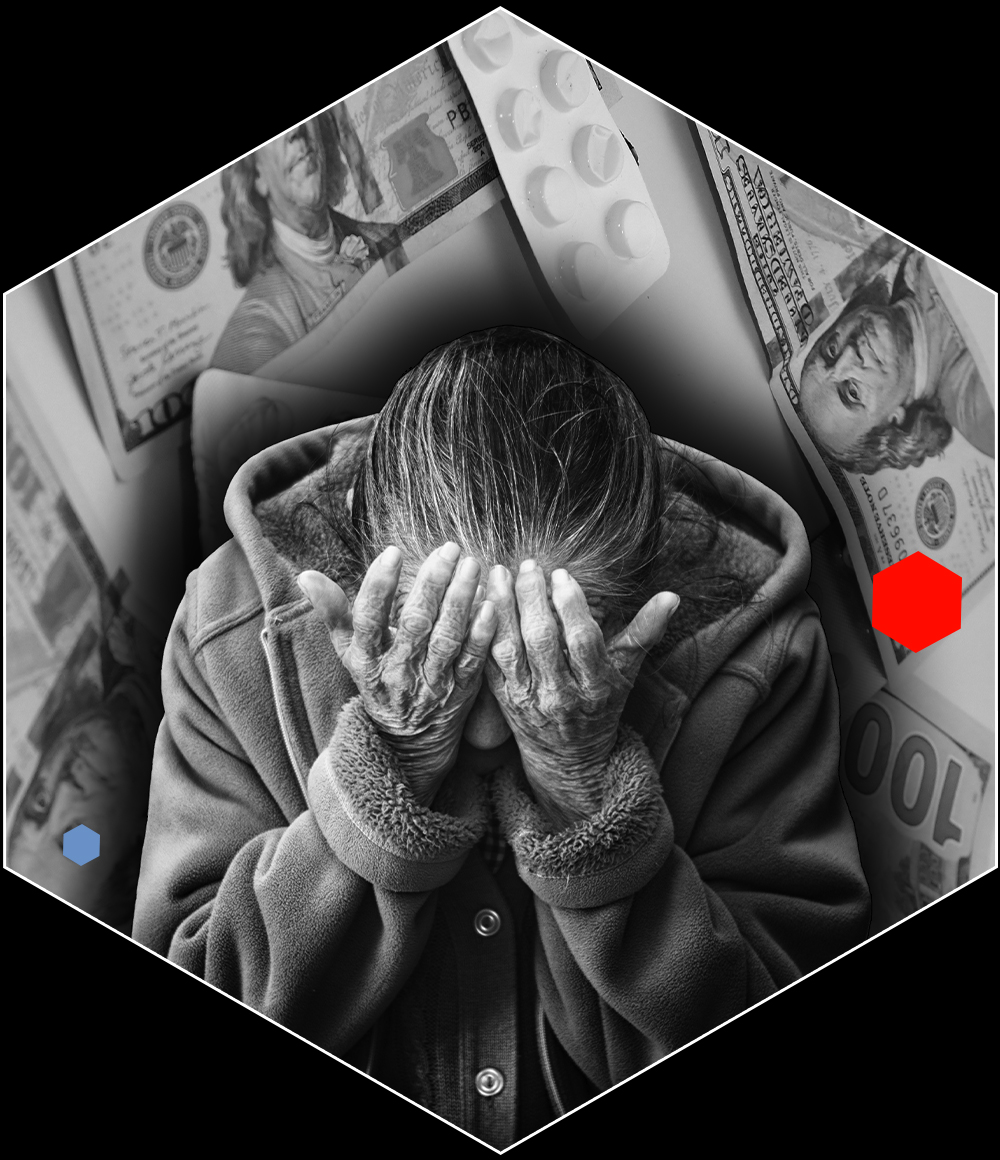
Homelessness and bankruptcy due to medical debt are very commonplace in the United States. Overinflated hospital costs, unnecessary procedures, double and triple billing contribute to mounting debts in the system that provides very little to no protection for population, contribute to prolongation of homelessness up to 2 years, with additional year of homelessness experienced by people of color.
Several studies have linked medical debt or medical debt-related bankruptcy with housing instability, but only one identified homelessness as an outcome. Fifty-six percent of people with medical bill problems reported making significant trade-offs as a result of medical bill payment or pressure to pay, including forgoing necessities such as food, rent, or heat; spending their savings; incurring credit card debt; and declaring bankruptcy. A 2007 study exploring a previously undocumented association between medical debt and its effects on “low-income families’ efforts to own, rent, or maintain their homes” found 25% of respondents said their medical debt led to housing problems; furthermore, individuals with medical debt on their credit reports were twice as likely to have housing problems than those whose credit reports did not include medical debts. Nine percent of homeowners facing foreclosure in Philadelphia cited illness or medical costs as the primary reason for being behind on mortgage payments. In the same study, half of survey respondents listed a health-related cause as contributing to the foreclosure of their home. The study was small, and the response rate was 7%, but it suggests a link between medical costs and housing instability. Houle and Keene examined the risk of default and foreclosure using data from a nationally representative longitudinal study of older middle-aged adults, finding worsening health increased the risk of default and foreclosure.
…
We were surprised at how even small amounts of debt were associated with longer duration of homelessness. Our study sample reported relatively small amounts of debt (<300 dollars) were associated with current homelessness, consistent with a 2014 finding that foreclosure was associated with even small amounts of medical debt. A 2016 study of medical debt in collections found more than half were for less than $600. A 2004 study also found relatively small amounts of debt (<500 dollars) led to housing problems, and that health insurance was not protective.
We also found insurance was not protective—more than half of respondents with medical debt reported having insurance at the time they incurred the most medical debt. Despite full implementation of the ACA, several studies in various cities suggest even small amounts of debt seem highly destabilizing, though noting a large degree of regional variation in this finding.
Bielenberg JE, et. al., Presence of Any Medical Debt Associated With Two Additional Years of Homelessness in a Seattle Sample – The Journal of Health Care Organization, Provision, and Financing. 2020;57, WEB 2024