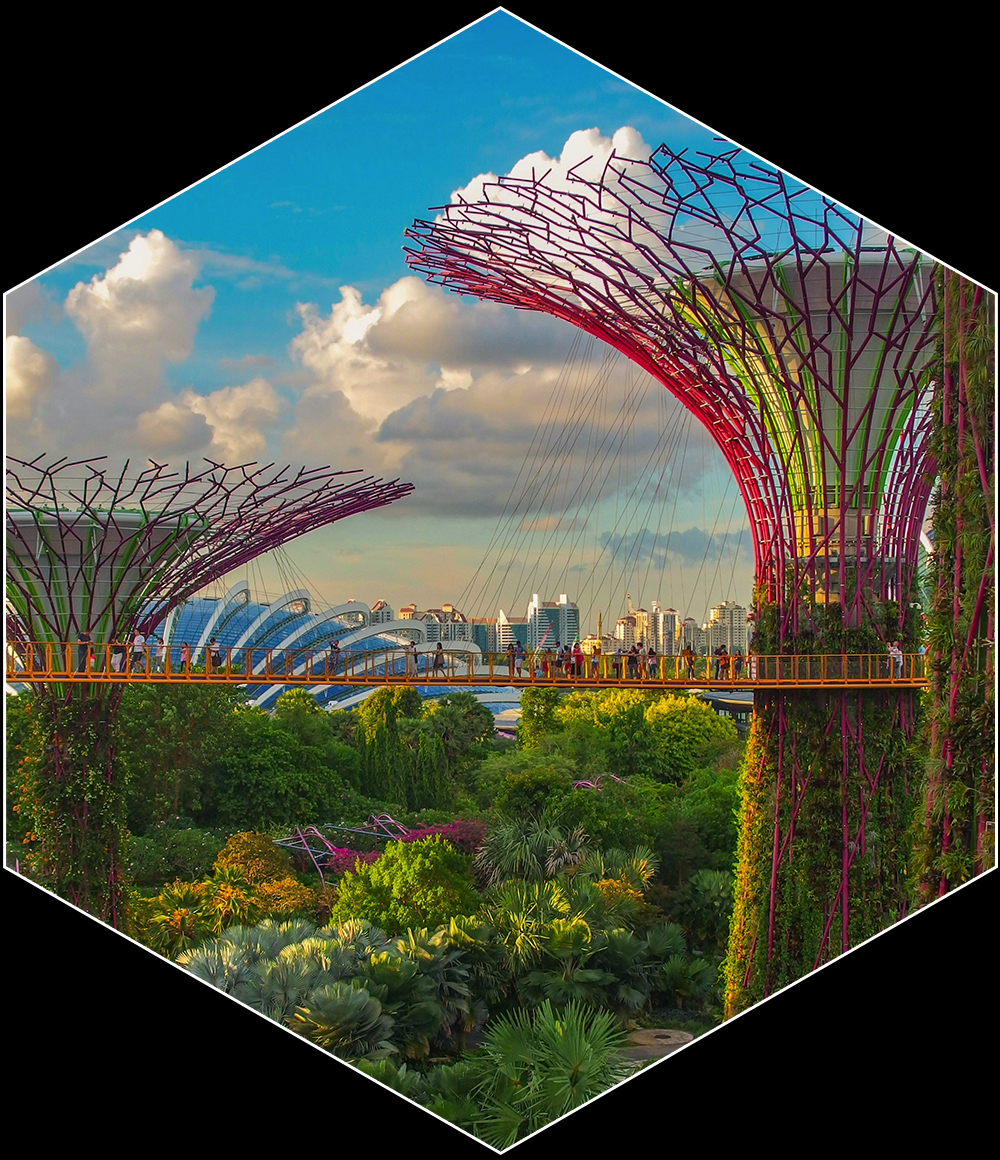
The philosophy of Singapore’s development is rooted in what they called “an economic pragmatism.” This approach boils down to strategic thinking that can and was applied in many forms by different nations. Most of the time it is not a question of resources, but strong governance will.
In development economics, all countries go through three stages and four phases of growth. The three stages of growth are (a) primary– agriculture, (b) secondary–manufacturing, and (c) tertiary–services.
I now add a post-tertiary stage (d), namely knowledge, which underpins all three stages.
The four phases of growth are (a) low cost, low tech, (b) low cost, medium tech, (c) high cost, medium tech, and (d) high cost, high tech.
All developing countries including Singapore and China began as low cost, low tech producers. As you know, Singapore inherited from the British a stagnant economy and thousands of people with no jobs. Yet this abundance of unskilled, low wage labor enabled Singapore to be competitive producers of garments and wigs. These labor-intensive industries helped absorb our unemployed workers.
As unemployment dropped, wages began to rise. The MNCs from the United States, Europe and Japan were attracted to Singapore not just because of good governance, though this is a precious resource we have painstakingly built up. They came because we began to raise our educational standards and upgrade skill levels through industrial training centers, polytechnics, and the engineering faculties of our universities.
Ngiam Tong Dowd, Dynamics of the Singapore Success Story – Cengage Learning Asia Pte, Singapore, 2011 p 39-40









 PROsociotech